
It's 1:47 a.m. You're tired, your alarm is set for 7, and you've already flipped your pillow to the cool side three times.
You close your eyes. Nothing happens.
Then comes the mental math: If I fall asleep right now, I can still get five hours.
Sound familiar?
When you can't fall asleep, even simple advice like "just relax" can feel useless. You're already trying to relax. That's the problem.
The tricky thing about sleep is that you can't make it happen through sheer effort. But you can change the conditions that make sleep more likely.
Whether your mind won't stop racing, your sleep schedule is all over the place, or you simply don't feel sleepy at bedtime, there are practical ways to approach the problem.
Let's start with what you can do tonight.
How to Fall Asleep When You Can't: The Short Answer
If you're lying awake and sleep isn't coming, stop trying to force it. Keep the lights low, put your phone away, and try a calming activity such as slow breathing or reading.
If you've been awake for roughly 20 minutes and are getting frustrated, leave your bed and do something quiet until you feel sleepy again. Don't watch the clock to measure those 20 minutes.
For better sleep over time, focus on a consistent wake-up time, morning daylight, regular exercise, a comfortable bedroom, and limiting caffeine later in the day.
These strategies won't guarantee instant sleep, but they're a sensible starting point supported by established sleep-health guidance.
What to Do Right Now When You Can't Sleep
If you're reading this in the middle of the night, you probably don't want a lecture about your afternoon coffee.
You want to know what to do next.
Here's a practical plan.
Step 1: Stop Checking the Time
Looking at the clock can turn a frustrating night into a stressful one.
You start counting the hours you have left. Then you worry about tomorrow's meeting, your commute, or how exhausted you'll feel in the morning.
That pressure can make it harder to settle down.
Turn your clock away. Put your phone out of reach.
You don't need to know exactly how long you've been awake.
Step 2: Let Your Body Settle
Try a simple breathing exercise.
Breathe in gently through your nose, then exhale slowly and comfortably. Repeat for a few minutes.
You can also try progressively relaxing your muscles, starting at your feet and moving toward your shoulders.
Neither technique is a guaranteed sleep switch. The goal is to reduce tension, not to perform the exercise perfectly.
If focusing on your breathing makes you uncomfortable or more anxious, stop and choose another calming activity.
Step 3: Get Out of Bed If You're Still Wide Awake
This might be the most counterintuitive sleep tip.
When you're desperate for sleep, getting out of bed seems like the opposite of what you should do.
But spending long periods awake and frustrated in bed can strengthen the association between your bed and wakefulness.
If you're still awake after roughly 20 minutes and can get up safely, leave the bed for a quiet activity. Treat that timing as a rough guide and skip checking the clock.
Sit somewhere comfortable with dim lighting. Read something relaxing or listen to quiet music.
Avoid working, checking notifications, or doing anything stimulating.
Return to bed when you feel sleepy.
You can repeat this process if necessary.
Step 4: Don't Try to Rescue the Night With Your Phone
It's tempting to reach for your phone when sleep won't come.
Maybe you'll watch a few videos until you're tired. Maybe you'll look up another sleep technique.
The problem is that scrolling can easily become more engaging than you intended.
Keep your nighttime activities quiet and predictable.
If you need your phone for calming audio, consider playing it with the screen off and notifications silenced.
Step 5: Keep Tomorrow's Wake-Up Time Reasonably Consistent
After a difficult night, sleeping until noon might sound appealing.
But a dramatically later wake-up time can make it harder to feel sleepy at your usual bedtime the following night.
Try to maintain a reasonably consistent schedule.
If you're dangerously sleepy, don't drive or perform safety-sensitive tasks. Rest and safety come first.
One bad night doesn't mean you've ruined your sleep schedule.
Why Can't I Sleep Even Though I'm Tired?
Here's something that surprises people: being tired and being sleepy aren't always the same thing.
You might feel mentally drained after eight hours of meetings but still feel alert when your head hits the pillow.
Sleep depends on several interacting processes, including your body's internal clock, accumulated sleep pressure, and level of alertness.
When those processes aren't aligned, falling asleep can become difficult.
Your Brain Is Still in Work Mode
Imagine spending your evening answering emails, paying bills, and catching up on messages.
Then, at 10:30 p.m., you expect your mind to switch off immediately.
For many people, that transition isn't easy.
Stress and worry can keep you mentally engaged even after your day is technically finished.
A short wind-down routine may help create a clearer separation between daytime responsibilities and bedtime.
Your Body Clock Is Out of Sync
Your circadian rhythm is the internal timing system that helps regulate sleep and wakefulness.
If you regularly go to bed and wake up at different times, your body may not be ready for sleep when you want it to be.
This can happen after traveling across time zones, working changing shifts, or staying up much later on weekends.
A consistent wake-up time and regular exposure to daylight can help support your natural rhythm.
Caffeine Is Still Affecting You
That 3 p.m. iced coffee might not feel particularly powerful by bedtime.
But caffeine can remain active in your body for hours.
Some people are more sensitive to its effects than others.
If you're struggling to fall asleep, experiment with an earlier caffeine cutoff and see whether it makes a difference.
You're Spending Too Much Time Trying to Sleep
Going to bed extra early after a bad night may seem helpful.
But if you aren't sleepy yet, you could spend more time lying awake.
Over time, that can make bedtime feel like something you have to endure rather than something you naturally look forward to.
A regular wake-up time and going to bed when you're genuinely sleepy are often more useful than simply adding hours in bed.
9 Practical Ways to Sleep Better at Night
Once you've addressed what to do during a sleepless night, the next step is to make future nights easier.
These habits work best when they're realistic enough to maintain.
1. Choose a Wake-Up Time You Can Actually Keep
A consistent sleep schedule doesn't mean forcing yourself into a 5 a.m. morning routine.
If your workday starts at 9 and you function well waking up at 7, there's no reason to wake up at 5 just because someone on social media recommends it.
Pick a wake-up time that fits your life and gives you enough opportunity for sleep.
Try to keep it reasonably consistent throughout the week.
Most adults need at least seven hours of sleep, though individual needs vary.
2. Get Outside During the Day
Morning light helps reinforce your body's sleep-wake rhythm.
You don't need an elaborate wellness routine.
Take your coffee outside. Walk around the block. Spend part of your lunch break outdoors.
The goal is regular daylight exposure, especially earlier in the day.
If you work nights or have an unusual schedule, your light-exposure needs may be different.
3. Give Caffeine an Earlier Curfew
You don't necessarily have to give up coffee.
But you may need to change when you drink it.
If your usual bedtime is 10:30 p.m., try avoiding caffeine during the late afternoon and evening.
If you're particularly sensitive, an earlier cutoff may be more helpful.
And remember, coffee isn't the only source. Tea, energy drinks, some sodas, and certain medications can contain caffeine.
4. Make Your Bedroom Comfortable, Not Complicated
A good sleep environment doesn't have to be expensive.
Start with three things:
Temperature: Keep the room comfortably cool. The National Sleep Foundation suggests 60–67°F as a useful range, but personal comfort varies.
Light: Reduce unnecessary light from windows, electronics, and bright clocks.
Noise: If outside sounds interrupt your sleep, consider earplugs, a fan, or steady background noise.
If you're constantly adjusting your pillow or waking up uncomfortable, your bedding may deserve attention too.
5. Create a Wind-Down Routine That Fits Your Life
You don't need a two-hour bedtime ritual.
For many people, 20–30 minutes of quieter activity is a reasonable place to start.
You might take a warm shower, read a few pages of a book, or prepare your clothes for tomorrow.
Try to avoid turning the routine into another task you must complete perfectly.
The point is to reduce stimulation, not create a new source of stress.
6. Move Your Body Regularly
Exercise can support sleep quality and overall health.
A daily walk is a perfectly reasonable starting point.
If you enjoy running, strength training, swimming, or cycling, those activities can fit into a healthy routine too.
Some people find vigorous exercise close to bedtime energizing. If that's you, move your workout earlier.
You don't need to avoid all evening exercise if it doesn't interfere with your sleep.
7. Be Careful With Alcohol as a Sleep Aid
A glass of wine might make you feel drowsy.
That doesn't mean it improves your sleep.
Alcohol can disrupt sleep later in the night and contribute to awakenings.
If you notice that you sleep poorly after drinking, reducing or avoiding alcohol may help.
8. Keep Naps Short When Nighttime Sleep Is Difficult
There's nothing inherently wrong with taking a nap.
But if you're struggling to fall asleep at night, long or late-afternoon naps may reduce your sleepiness at bedtime.
Consider a short nap of around 20 minutes earlier in the day, if needed.
If you work overnight shifts, your situation may require a different approach.
9. Give Your Worries Somewhere Else to Go
You know those thoughts that suddenly appear when you turn off the lights?
Did I pay that bill?
What if tomorrow's presentation goes badly?
I forgot to reply to that email.
Try writing down tomorrow's tasks before you begin winding down.
You can make a short list of what needs attention and what can wait.
It won't eliminate every worry, but it may help you avoid using bedtime as your daily planning session.
Which Sleep Tip Should You Try First?
Not every sleep problem has the same cause.
Use this table to identify a reasonable first step.
Swipe or scroll to compare all columns
What You're Experiencing | What to Try First |
|---|---|
Your mind keeps racing | Write down tomorrow's concerns before bed and try a calming activity |
You're tired but not sleepy | Keep a regular wake-up time and avoid going to bed too early |
You keep checking the clock | Turn the clock away and stop calculating remaining sleep |
You feel too warm in bed | Adjust room temperature, bedding, and sleepwear |
You wake up from noise | Try earplugs or consistent background noise |
You can't sleep after afternoon coffee | Move your caffeine cutoff earlier |
You lie awake for long periods | Get out of bed briefly and return when sleepy |
You feel sleepy during the day despite adequate time in bed | Discuss persistent symptoms with a healthcare professional |
These are starting points, not diagnoses. More than one factor may be affecting your sleep.
How Can We Get Good Sleep? Try This 7-Day Sleep Reset
If your sleep schedule has become unpredictable, you don't need to change everything overnight.
Instead, spend a week making small adjustments.
The goal isn't to achieve perfect sleep in seven days. It's to establish a few habits you can continue.
Swipe or scroll to compare all columns
Day | Your Focus | What to Do |
|---|---|---|
Day 1 | Establish a baseline | Record your usual bedtime, wake-up time, and main sleep difficulty |
Day 2 | Consistent mornings | Choose a realistic wake-up time and get daylight |
Day 3 | Caffeine | Move your last caffeinated drink earlier |
Day 4 | Bedroom comfort | Adjust lighting, noise, and temperature |
Day 5 | Evening routine | Spend 20–30 minutes doing something calming |
Day 6 | Daytime activity | Add a walk or another enjoyable form of exercise |
Day 7 | Review | Notice which changes helped and choose what to maintain |
How to Know Whether Your Sleep Is Improving
Don't judge your progress only by how quickly you fall asleep.
Ask yourself:
Am I spending less time frustrated in bed?
Am I waking up at a more consistent time?
Do I feel more alert during the day?
Am I waking up less often?
Do I feel less anxious about bedtime?
A brief sleep diary can help you notice patterns.
If tracking makes you more anxious, keep it minimal or skip it.
And if you have persistent insomnia, a week of better habits isn't a substitute for appropriate treatment.
Natural Sleep Remedies: What Helps and What's Overhyped?
When you search for natural ways to fall asleep, you'll find everything from herbal teas to magnesium supplements and expensive sleep gadgets.
Some may be comforting. Others have limited evidence.
Here's how to think about a few popular options.
Warm Milk and Chamomile Tea
A warm, caffeine-free drink can be a pleasant part of a bedtime routine.
But evidence that warm milk or chamomile reliably treats insomnia is limited.
If you enjoy a warm drink and it doesn't cause discomfort or frequent bathroom trips, there's nothing wrong with making it part of your evening.
Just don't expect it to work like a sleeping pill.
Melatonin
Melatonin is a hormone involved in regulating sleep timing.
Supplements may be useful in certain situations involving circadian timing, such as jet lag, but they aren't a universal solution for chronic insomnia.
In the United States, melatonin is sold as a dietary supplement, and product quality and actual ingredient amounts can vary.
If you’re comparing melatonin products, our Yu Sleep review shows how to read the dose on a liquid supplement label and check whether the research supports the seller’s claims.
Melatonin can also cause side effects or interact with medications.
Speak with a healthcare professional before using it, particularly if you take other medications, are pregnant, or have ongoing health concerns.
Magnesium Supplements
Magnesium is important for normal bodily function, but evidence that taking extra magnesium reliably improves sleep in people without a deficiency remains limited.
More isn't necessarily better.
Supplements can cause side effects and may interact with medications.
If you're considering magnesium specifically for sleep, discuss whether it's appropriate with a healthcare professional rather than assuming it's necessary.
White Noise and Sleep Sounds
Steady background sounds may help mask distracting noise.
For someone living near a busy street or sharing a home with other people, this can be useful.
However, evidence that white noise improves sleep for everyone is mixed.
Keep the volume comfortable and avoid placing loud sound sources close to your ears.
A Better Pillow or Mattress
Comfort matters.
If your neck feels strained or your mattress causes pressure-point discomfort, better-fitting bedding may make it easier to rest.
But there's no evidence that one particular pillow or mattress can cure insomnia.
Start by identifying the discomfort you're trying to solve.
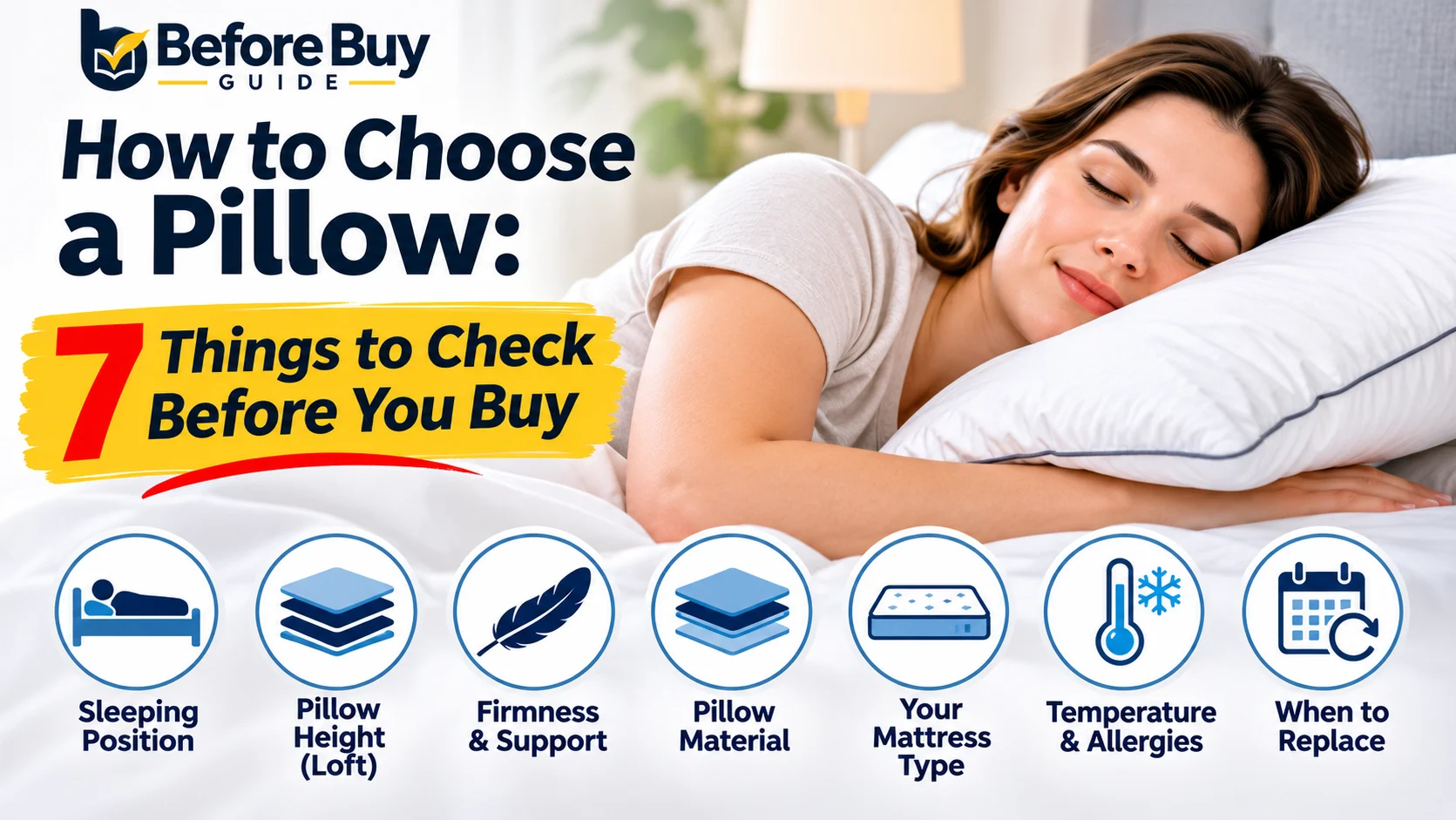
For more guidance, read our How to Choose a Pillow guide.
What If You Keep Waking Up in the Middle of the Night?
Sometimes falling asleep isn't the problem.
You drift off easily, only to wake up at 2 or 3 a.m. and struggle to get back to sleep.
Occasional nighttime awakenings are normal.
If you wake up, avoid immediately checking the time or reaching for your phone.
Keep the lights low and give yourself an opportunity to settle.
If you remain awake and frustrated, use the same approach recommended for difficulty falling asleep: get out of bed, do something quiet, and return when sleepy.
If this happens regularly, consider whether factors such as alcohol, nighttime bathroom trips, pain, medication effects, or sleep disorders could be contributing.
Persistent awakenings deserve medical attention, especially when they affect daytime functioning.
When Better Sleep Habits Aren't Enough
Sleep tips are helpful, but they don't address every cause of poor sleep.
If you've been struggling for weeks or months, it may be time to look beyond your bedtime routine.
Chronic insomnia is generally characterized by difficulty falling asleep or staying asleep at least three nights per week for three months or longer, along with daytime impairment and adequate opportunity for sleep.
You don't have to wait three months to seek help.
Talk with a healthcare professional if poor sleep is affecting your work, mood, concentration, or quality of life.
Other symptoms deserve attention too, including:
Loud snoring accompanied by gasping or breathing pauses
Significant daytime sleepiness
Uncomfortable sensations in your legs that worsen at rest
Persistent pain or other symptoms that interrupt sleep
For chronic insomnia, cognitive behavioral therapy for insomnia (CBT-I) is recommended as a first-line treatment.
CBT-I is a structured treatment that helps address the patterns of thinking and behavior that maintain insomnia.
It is more comprehensive than following general sleep hygiene tips.
The Bottom Line
If you can't fall asleep tonight, you don't need another complicated sleep hack.
Start with the basics: stop watching the clock, reduce stimulation, and get out of bed for a quiet activity if you're lying awake and frustrated.
Then look at the bigger picture.
A consistent wake-up time, daylight, physical activity, and a comfortable bedroom can all help support better sleep.
You don't need to change everything at once. Choose the habits that address your biggest obstacles and build from there.
And remember, good sleep isn't about achieving a perfect number on a tracker or falling asleep in record time.
It's about getting enough restorative rest to feel and function better during the day.
If that continues to feel out of reach, professional support is worth seeking.
Medical disclaimer. This article provides general educational information and is not intended to diagnose, treat, or replace professional medical advice. Consult a qualified healthcare professional about persistent sleep problems or before starting sleep supplements or medications.
Frequently asked questions
How can I fall asleep fast when I can't sleep?
Start by reducing stimulation rather than trying harder to sleep. Put your phone away, dim the lights, and try a calming activity. If you're awake and frustrated after roughly 20 minutes, leave your bed and return when sleepy. There is no technique guaranteed to make everyone fall asleep immediately.
Why can't I sleep even when I'm exhausted?
Physical or mental exhaustion doesn't always mean your body is ready for sleep. Stress, caffeine, an irregular body clock, medications, and underlying health conditions can all contribute. If the problem happens frequently, consider discussing it with a healthcare professional.
How can we get good sleep naturally?
Start with consistent sleep and wake times, regular daylight exposure, exercise, a comfortable bedroom, and limiting caffeine later in the day. These habits can support sleep without relying on supplements.
Is it normal to take 30 minutes to fall asleep?
Sleep onset varies from person to person and from night to night. Occasionally taking 30 minutes isn't necessarily a problem. If you regularly struggle to fall asleep or experience daytime difficulties, it's worth discussing with a healthcare professional.
Should I stay in bed if I can't fall asleep?
If you're awake for a prolonged period and becoming frustrated, getting out of bed for a quiet activity can help. Return when you feel sleepy. This approach is part of stimulus-control techniques used in behavioral treatment for insomnia.
Does drinking warm milk help you sleep?
Warm milk may feel soothing as part of a relaxing bedtime routine, but scientific evidence that it reliably improves sleep is limited. It shouldn't be considered a treatment for persistent insomnia.
How many hours of sleep do adults really need?
Adults ages 18–60 generally need at least seven hours of sleep per night, according to the CDC. Sleep needs vary, and quality matters alongside duration.
What should I do if nothing helps me sleep?
If sleep problems persist despite reasonable changes, speak with a healthcare professional. Treatments such as CBT-I can be effective for chronic insomnia, and an evaluation can identify other possible causes.
Sources & further reading
- Mayo Clinic — Sleep Tips: 6 Steps to Better Sleep ↗
- National Sleep Foundation — Sleep Tips ↗
- Johns Hopkins Medicine — Natural Sleep Aids ↗
- CDC — About Sleep ↗
- NHLBI — Healthy Sleep Habits ↗
- NHLBI — Insomnia Treatment ↗
- American Academy of Sleep Medicine — Behavioral and Psychological Treatments for Chronic Insomnia ↗
- NCCIH — Sleep Disorders and Complementary Health Approaches ↗
- NHLBI — Insomnia Diagnosis ↗
Research notes
Editorial article- Basis of this page
- Read the article’s methods, sources and limitations for the basis of its statements.
- Source documents
- 9 sources are linked in this article for you to inspect.
- Commercial context
- Eligible links may earn a commission. A retailer listing does not establish a health benefit.